Want to learn more about figure skating history? You are in the right place!

Created in 2013, Skate Guard Blog explores the overlooked, forgotten, and underappreciated corners of figure skating history - from little-known stories to fresh perspectives on famous skaters, eras, and events. There’s always something new to discover, so grab a cup of coffee and glide into the rich, fascinating history of the world’s most beloved winter sport.

An Early History Of Japanese Figure Skating


With the World Team Trophy in Tokyo this weekend and Yuzuru Hanyu and his Winnie The Pooh plush toys in full force, I couldn't think of a more fitting time to share a look back at an early history of figure skating in Japan.

Although evidence exists from 1804 of explorer and cartographer Kondo Morishige publishing a depiction of a reindeer pulling an Ainu man on primitive skates, Japan's humble beginnings in actual figure skating seem to trace back to the late nineteenth and early twentieth centuries. In February of 1877, one of the earliest visitors - American agricultural scientist William Penn Brooks - was assigned to work as a foreign advisor during the colonization project for Hokkaidō. He astounded locals by ice skating on a frozen creek at the Sapporo Agricultural College. Many of those who saw him were in shock as they had never even seen skates before. When skaters from America and Germany came to the country and imparted some knowledge to high school and college students in the subsequent decades, skating slowly started to catch on. A translated copy of one of George Henry Browne's books also made its rounds during this period. Organized Japanese skating clubs only really began in the early twenties, but the instructors relied heavily on these translated texts rather than their own experience. 

In September of 1931, Japan's Kwantung Army invaded the Manchuria and established a puppet state called Manchukuo. Their occupation lasted until the end of World War II, and it could very well be during this era that Japanese skating blossomed. The Manchukuo National Physical Education Association was established in 1932 to promote sport and in his book "A Companion To Japanese History", William M. Tsutsui writes that "Kobayashi Hideo hints at the role of Manchuria, for example, in popularizing ice skating in Japan and nurturing some of the nation's early international competitors."

This 1931 British Pathe silent video shows ice skaters making the most of a tough winter

That's not to say people weren't skating in Japan before the Manchu people helped popularize and support the sport. The Japan Skating Federation was formed in 1929 to serve as a governing body for both figure and speed skating. In Maribel Vinson Owen's 1938 "Primer Of Figure Skating Book", making a case for written instruction in figure skating, then-USFSA President and former U.S. Ice Dance Champion Joseph Savage wrote "that figure skaters can learn in this manner was ably demonstrated by the Japanese 1932 Olympic Figure Skating team who had to learn skating from the written word" suggesting Japanese skaters of the era received written instruction on elite level skating during the era.

The Shibaura Indoor Hall in Tokyo's Shiba Ward, proposed figure skating venue for the cancelled 1940 Winter Olympic Games

National Championships were first held in the early twenties but 1932 was the first year Japan sent skaters to the Winter Olympics or World Championships. Kazuyoshi Oimatsu and Ryoichi Obitani finished ninth and twelth in the 1932 Winter Olympics and seventh and eighth out of nine in their first effort at the World Championships.

Etsuko Inada at the 1936 Winter Olympics with men's champion Karl Schäfer 

Etsuko Inada would be the first female Japanese skater to compete internationally in 1936 when she competed at the European Championships, Olympic Games and World Championships and placed in the top ten at all three. At twelve, she was the youngest and smallest of all of the competitors at the 1936 Winter Games in Germany and was quite popular among the other athletes. The next Olympics were scheduled to be held in Sapporo, Japan and were cancelled due to World War II, but that or even World War II didn't end the skater's journey on the ice. As Japan and Germany were not invited to participate in the 1948 Winter Olympics in Switzerland, yet another precious chance for Olympic glory passed Inada by. She returned to competition in her late twenties in 1951 after many years away and reclaimed her national title in 1951 right before the 1952 Oslo Games but ultimately didn't make it to Oslo to compete. Inada turned to coaching students at the Jingu skating rink in front of the Prince Chichibu Memorial Sports Museum and coached several Japanese Champions including Junko Ueno and Miwa Fukuhara. Later in life, Inada opened a fashion boutique in Tokyo and she passed away of stomach cancer in 2003 in Chiba.

Prince Tsuneyoshi Takeda

A central figure in Japanese skating in the post-War era was the second and last heir of the Takeda-no-miya branch of the Japanese Imperial Family, Prince Tsuneyoshi Takeda. He came President of the Japan Skating Association in 1948 and held the position until 1985. ISU historian Benjamin T. Wright recalled, "He was regularly in attendance at Congresses and Championships around the World, constantly working for Japanese skating. He arranged for exhibition tours in Japan in 1953 and 1958 of some of the leading champions of the day as a means of introducing top level skating to the Japanese, and well remembered also is the comprehensive filming program which was a hallmark of the young Japanese team which came to Colorado in 1957. The pre-eminent position of the Japan Skating Federation... can be said in a large measure to be Prince Takeda's legacy to his nation and its sports."

Jack B. Jost, the 1953 Japanese Champion. Photos courtesy "Skating" magazine.

In the early fifties, an American Private from St. Louis named Jack B. Jost won the Japanese men's title. Nami Yasufuku at the Nagoya University Library found a March 12, 1953 article in the Asahi shinbun newspaper which stated that Jost (listed as Jack B. Johnston in error) "had won the U.S. Championship of pair skating. He was affiliated with Kyoto skating club at 1952/1953. Other players came short of the pass mark to compete the championship and only he got score over 4.0. He was the first foreigner to win the Japan Figure Skating Championships." With Caryl Johns, Jost was a Silver (junior) ice dance champion and a pairs competitor at the 1952 World Championships in Paris, France.

Nobuo Sato and Miwa Fukuhara skating in 1964

Four years after Johnston's win, a young man named Nobuo Sato would go on to dominate Japanese figure skating for a decade, winning ten consecutive Japanese titles and competing at two Winter Olympics and six World Championships. He would finish as high as fourth in a field of twenty at the 1965 World Championships in Colorado Springs. After retiring from competition, Sato married two time Japanese ladies champion Kumiko Okawa and the couple had a pretty talented daughter you might have heard of... I don't know... Yuka Sato? Ring a bell? Mr. Sato was inducted into the World Figure Skating Hall Of Fame and has coached a who's who of skaters including his daughter Yuka, Mao Asada, Miki Ando, Lucinda Ruh, Takahiko Kozuka, Fumie Suguri and Yukari Nakano. He's seen generations of skaters come and go including the reign of arguably Japan's most famous and well known skater Midori Ito. On Ito, Mr. Sato said in a 1989 edition of Asiaweek: "Ito was born with talent that can't be learned through training."

A young Midori Ito landing ten double axels in a row!

Whether through natural talent like Ito's or success achieved through arduous work on the ice like most skaters, Japan's skating community has continued to prosper under Sato's watchful eye and today Japan stands as one of the sport's superpowers with its first Olympic gold medals in history earned by Shizuka Arakawa and Yuzuru Hanyu within the past decade. The country continues to pump out talented athletes like nobody's business and you know what? That's really not bad for a country that certainly gave the rest of the world a thirty plus year head start when the competitive skating boom all began, now is it?

Skate Guard is a blog dedicated to preserving the rich, colourful and fascinating history of figure skating. Over ten years, the blog has featured over a thousand free articles covering all aspects of the sport's history, as well as four compelling in-depth features. To read the latest articles, follow the blog on FacebookTwitterPinterest and YouTube. If you enjoy Skate Guard, please show your support for this archive by ordering a copy of the figure skating reference books "The Almanac of Canadian Figure Skating", "Technical Merit: A History of Figure Skating Jumps" and "A Bibliography of Figure Skating": https://skateguard1.blogspot.com/p/buy-book.html.

Interview With Juanita-Anne Yorke


Winning three back to back South African titles from 1990 to 1992 might appear to be the highlight of Juanita-Anne Yorke's skating career on paper but her accomplishments in life go far, far beyond that. Although she missed the 1992 Olympics in Albertville as a result of a boycott on South African athletes in international competition, Juanita-Anne was part of the first contingent from her country to skate at the World Championships in twenty three years that year. Her subsequent life in law enforcement is every bit as fascinating. As much as we hear of 'bad cops' in the news, here's a great one who is committed to making a difference in the world. I think you'll really enjoy this interview!:

Q: Family plays a huge role in the support of any athlete. Was this the case for you as well?

A: Firstly, let me say thank you for interviewing me. It has been a long time since my last interview as I have been out of the sport for a while. I was going to continue to coach but decided to rather dedicate my life to all South Africans in the fight against Crime. My mother was always supporting me as was my father right throughout my skating career. I have three sisters as well and they too gave up long hours so that I could further my career in Figure Skating. God bless my family.


Q: What first brought you to the sport and got you hooked?


A: What first got me hooked... My cousin Melanie came home one day with a new pair of ice skates and being the Curious George that I was having my roller skates on asked my cousin "And what are those?" After she explained, we all decided to go ice skating as it was a very hot day in South Africa. I remember this clearly because it was too hot to even roller skate. So that Saturday morning, we went skating and I have never actually left the ice since. It was such a beautiful feeling to skate on that ice that day that I could not resist but begged and pleaded with my father Vincent Risden Yorke who was Managing Director of Renown Meats at the time to let me take up the sport. Imagine an eight year old negotiating a sport with her dad who is a director of a company! The ice gave me absolute freedom to show and express myself as a hyperactive child and yes, I am still an ADHD adult and have loads of energy at age forty two!

Q:After a twenty three year boycott as a result of the apartheid in South Africa, entries were initially slated from South Africa for the 1992 Albertville Games. Winning that year's National Championships at age nineteen, you were one of four figure skaters that were supposed to sent from your country to compete. What can you share about the Olympic experience that never happened?

A: Unfortunately, we never made the Olympics which Greatly saddened me due to the fact the Sport Moratorium that had not yet been lifted. I must Admit when I was handed my Protea Colours Blazer that replaced the Springbok Blazer, I was extremely proud and I know my Dad would of been as well but he had unfortunately passed away from a heart attack in 1990. I am very happy that my mother, Joyce Elizabeth Yorke, lived to see it though. She passed away in 1997 from cancer. I framed the blazer now and It will hopefully one day find its way to the Hall Of Fame.


Q: Although you didn't make it to Albertville, you were indeed part of the first South African contingent since 1968 at the World Championships that year in Oakland, 
finishing thirty ninth. Having trained in Colorado as a young skater, was the experience of competing at a World Championships in America particularly special for you?

A: In 1992, the World Figure Skating Championships were held in Oakland. I realized what Carlo and Christa Fassi had meant about training hard for eight hours a day! "Live, sleep, eat and breathe figure skating" would of been the more appropriate advice. To skate at world level, you really must have guts, determination, a solid eating plan, a lot of patience and nerves of STEEL! I remember opening the Worlds and it was amazing. That day was the first time in my whole skating career where I can truly say I actually felt nervous. There I was all of nineteen and I was living my dream, entertaining an audience of most probably like eight thousand people. The Colosseum was huge and I felt like a Gladiator that day as if the whole of South Africa depended on me. I went out and skated the best that I could for my country and I felt proudly South African. So maybe I was not as great as all the other skaters but I still did my best with the training that I had been provided, and you cannot do better than your best! The people were amazing and the team that was at Worlds were the cream of the crop of South Africa. I know I thanked the Worlds organizers but WOW... they really were the greatest when it comes to event planning. Truly! I would also like to thank America for having me. They have a beautiful country and I would visit again any day! Going back to Colorado Broadmoor ice arena was absolutely fantastic, and to think that I - me - Juanita-Anne Yorke - actually stayed at Beatty Hall where Ice Castles was filmed? That was awesome. I felt like a princess.


Q: What can you share about your decision to retire from the sport?

A: Why I retired from the sport? First off, a figure skater never truly retires. I still go and ice skate at the rink at Forrest Hill in Centurion as I have moved to the capital city of Pretoria in South Africa. The real reason why I gave up the sport was to care for my sick mother who was diagnosed with cancer just after we got back from the World Figure Skating Championships in 1992. That is why I never came back for a rematch. I also do shift work now at Crime Stop South Africa so it is very difficult to actually set up a coaching system where I could dedicate the necessary hours to my skaters. I am a perfectionist by nature and I believe in structure and order. If I could, I would build my own ice rink in my back yard. I truly miss the ice. It's a part of me that will never ever go away. I am a figure skater forever in my heart. If life had given me the opportunity then, I would have most probably made it to the 1998 Winter Olympics but my book of life was not written that way. We never question God; we just accept the book the way that it is written! It was a very easy decision to make because my family comes first always. To all my fans, sorry if I let you down. I'm sure you understand the circumstances that were consequentially great for a nineteen year old to make life changing decisions and in actual fact there was no choice in the matter.

Q: You've served as an officer with the South African Police Service and as you mentioned earlier, you now work with Crime Stop South Africa. What drew you to law enforcement and what have been the most rewarding and (alternatively) disheartening parts of the jobs?

A: In 2001, I joined the South African Police Services and I became a reservist. At the time, I had also joined up for Shaolin Kung fu to keep my mind and body fit. I was unfortunately a victim of crime where they had broken into my house and cleared me out literally. When the policeman arrived, we had a chat and I will never forget his words: "Why don't you join as a reservist and help us fight crime!" I was still a spoiled brat I think at that stage so I was actually very upset because they had stolen my Mom's bangles. I said "take anything like my TV, but leave my family heirlooms out of the picture." I asked the policeman how to join and to make that difference and he said I ought to go down to my nearest police station and apply... so I did! I joined on my birthday, the eighth of April 2001, and loved the work so much that I went permanent on the twenty third of December, 2002. I was part of the fifth of January intake of 2003 and I had an absolute blast training for three months at Pretoria West SAPS College. I felt like I was training for skating every day. Very structured and very disciplined just like my sport! I also like to help my members in the community so I am making a difference every day in a lot of peoples lives. I can truly thank my mother and father for bringing me up in the correct way so maybe one day I can save even more lives. Being a policewoman is a true calling. You have to be dedicated and love your job or don't do it! It's that simple. I believe in serving and protecting so that the children and all South African citizens have a safe environment to live in and a better and brighter future.

Q: Who are your three favourite figure skaters of all time and why?

A: First off, Kristi Yamaguchi. Having skated with Kristi at Worlds and sharing the ice with her I can truly say she is my idol. If I were to have a mentor it would be her. She is so graceful and an absolute beautiful person. Even though we were competing against each other she would find time to help me. Thanks Kristi for the help then - I will never forget it! Secondly, Dorothy Hamill. In South Africa we used to watch the NutraSweet World Professional Figure Skating Championships and Dorothy was always so graceful and she made skating look easy. Her technical side was also quite great to watch and I learned a great deal off ice just watching the show over and over and over again. I would go try it on the ice and my coach Karen Huth would ask me what in the world was I trying to do that day the we would work on the move. Thirdly, Scott Hamilton. I was personally trained by Scott Hamilton when he came to Sun City, South Africa years ago. I don't even think he will remember it but anyway! He has always been my mentor on the technical side. He taught me how to do the real fast spins that he is famous for and thanks for that, Scott. When I was at Worlds, it was great seeing him again. Last but not least my two favourite ice dancers of all time are Jayne Torvill and Christopher Dean. It was great to meet Christopher at the World Championships in 1992. To finally see the 'Perfect Six' live. wow! WOW... now that's skating! Amen!

Q: What's one thing most people don't know about you?

A: (laughing) I drive a motor bike and I am sure if my mother was still alive she would argue that It's a coffin on wheels and I should buy a car! The one thing most people don't know about me is that I'm still weight conscious after all these years, but luckily I'm hyperactive so I can still shed weight fast.

Q: When is the last time you were on the ice?

A: The last time I was on the ice was last week, but competitively? 1994.

Q: What is the biggest lesson figure skating has taught you in life?

A: The biggest lesson that figure skating has taught me is how to live life! It taught me structure. Every jump is structured in a specific way, if you lean too much into the loop for example you will fall so don't do it that way! The police service is structured as well with hierarchy of ranks. Skating taught me balance and patience. When it was still FIGURE skating, we did the rockers and the early morning five o'clock without coffee figure eights and traced our circles and used a scribe. It taught me balance which I still have today and use it everywhere I go... even on my motor bike. Who knows, maybe one day you will all see me at Motor Cross? The other life skills that figure skating has taught me are discipline, timorousness, how to deal with difficult situations and making them easy because there is always a reason why something happens. Figure skating really taught me a lot about life, because it still is a part of my life. When I was at Worlds in 1992, I learned how to be a representative for my country at nineteen. It really is immense pressure on anyone of that age. Thanks to that life experience I now continue the good work in the South African Police Service and last year in October Crime Line hosted the Crime Stoppers International Conference held in Cape Town which I too was blessed to be a part of. It was so amazing to meet so many different people with a similar skill set to mine. Thanks to my experience in world events, I managed to speak as a Warrant Officer to high ranking officials with grace, discipline, respect and ease. I have to thank that experience in America for helping this humble South African to be a better person. God bless you one and all and I hope that you are all still sending your tip offs to Crime Stoppers. I'll be protecting you all from afar. For anyone that submits a tip, I salute you. You are my hero!

Skate Guard is a blog dedicated to preserving the rich, colourful and fascinating history of figure skating. Over ten years, the blog has featured over a thousand free articles covering all aspects of the sport's history, as well as four compelling in-depth features. To read the latest articles, follow the blog on FacebookTwitterPinterest and YouTube. If you enjoy Skate Guard, please show your support for this archive by ordering a copy of the figure skating reference books "The Almanac of Canadian Figure Skating", "Technical Merit: A History of Figure Skating Jumps" and "A Bibliography of Figure Skating": https://skateguard1.blogspot.com/p/buy-book.html.

Interview With Ali Demirboğa


Following in the figure eights of Tugba Karademir, the skater who really helped put Turkey on the map as a 'figure skating nation', twenty four year old Ali Demirboğa has been making his very own name in the sport/art with impressive performances in international competitions for the last ten years, including multiple trips to the European and World Championships. This Turkish Champion took the time to share his story with me in this recent interview, talking about everything from the unique challenges his country faces in developing skaters to the ups and downs of his career, competing against his idol, his favourite skaters and much more. You're bound to enjoy this one!


Q: You have won the Turkish National title five times and represented your country internationally 
at four European Championships, two World Championships as well as at over twenty international competitions. Looking at your skating career so far, what are your proudest moments or most special memories? 

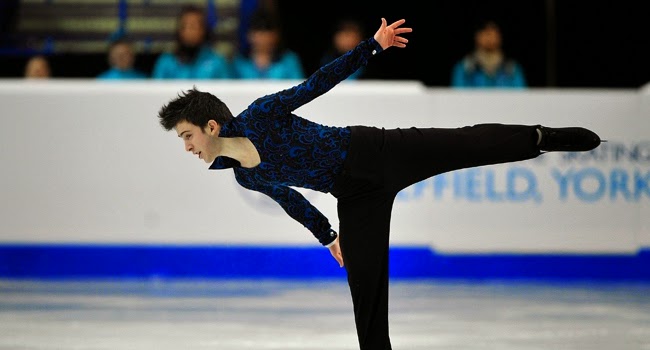
A: When I was first national champion in 2010, I realized that I had the chance to go to the European Championships. I said "Oh my God! I'm going to watch Evgeni Plushenko live!" Unfortunately, our federation decided not to take me to the Europeans that year because I wasn't experienced enough. I was very sad and I thought I would never be able to watch him live. Two years later at the 2012 Europeans in Sheffield, I was going to compete and when I heard that Plushenko was ALSO competing I was head over heels, I couldn't believe it. At the competition, I made it past the preliminary round with a free skating score of 93.99 and I earned the right to compete for short program. This is where my highlight of the story began. As we drew our assignments for the short program it turned out that I was going to be in the same warm-up group with Evgeni. When I was skating, he stood at the side of the ice since he was next. I couldn't even skate. It was very overwhelming. He was clapping for me and he was watching me. It was a unbelievable moment for me.


Q: Turkey is a relatively new player on the international figure skating 'scene'. What are training 
conditions like in Kocaeli and elsewhere in Turkey and how much competition do you face from other men's skaters in your own country?

A: Turkey's conditions getting better every year. We had only two Olympic size ice rinks five years ago but there are seven right now. There will be twelve to thirteen ice rinks in a few years. We still have a lot of losses but I believe that Turkey going be a top ten country in figure skating in the next ten years. We now have four or five strong competitors at Nationals every year.

Q: You're coached by Rana Belkis Gocmen but you've also done some training at Alexei Mishin's summer camps. What makes Alexei Mishin such a respected coach and what makes your own coach the best person for you to be working with?

A: Alexei Mishin means experience, quality, perfect technical style and discipline. To be short, he is almost everything for figure skating. I first learned how to skate with Rana Gocmen in 1999 so that has meant we have been together for sixteen years. When I started skating, I was a young skater
and she was a young coach. Sometimes we both learned things together and now she is one of the best coaches in all of Turkey. She is perfect!


Q: What are your ultimate goals in figure skating and will you continue to train towards the PyeongChang 2018 Olympics?

A: Yes, I will continue until 2018 and I am going to try to make it to the Olympics. The PyeongChang 2018 Olympics have always been my ultimate goal as a figure skater. Hopefully I can go.

Q: What do you see as your strengths and weaknesses as a skater and a person?

A: As a figure skater, my strengths would have to be my ability to deal with the mental preparation and performance involved in the sport. İ have a tendency to rush in to my jumps while performing my programs and this is definitely my weakness and something I need to better prepare for. As an individual, I can be emotional in my decision making and life in general. I find this to be my weakness. My strength is definitely my personality and character.

Q: Who are your three favourite skaters of all time and why?

A: My favourites are first of all Evgeni Plushenko because he is a legend. Four Olympic medals is incredible. He is the best jumper I have ever seen and so creative. My second favourite would be Daisuke Takahashi because his skating skills and abilities are amazing. His choreography is pleasant and he becomes tremendous as soon he gets on the ice. Third would be Patrick Chan. He is probably the best combination of the technical side and the movement.

Q: What's one thing most people don't know about you?

A: İ guess there is nothing that people don't know about me. I love to live with everything in full view.

Q: What do you love about figure skating more than anything else?

A: I am always saying that figure skating isn't my favourite sport. Actually, I love to play soccer. Until I was fourteen years of age, I skated and played soccer at the time. I quit soccer and focused on skating because it was clear to me that there was something different that was keeping me focused on figure skating instead of soccer or other sports. This is the only sport that I can present myself with the music.

Skate Guard is a blog dedicated to preserving the rich, colourful and fascinating history of figure skating. Over ten years, the blog has featured over a thousand free articles covering all aspects of the sport's history, as well as four compelling in-depth features. To read the latest articles, follow the blog on FacebookTwitterPinterest and YouTube. If you enjoy Skate Guard, please show your support for this archive by ordering a copy of figure skating reference books "The Almanac of Canadian Figure Skating", "Technical Merit: A History of Figure Skating Jumps" and "A Bibliography of Figure Skating": https://skateguard1.blogspot.com/p/buy-book.html.

The World Cup Of Figure Skating Competition


Perhaps the most decorated and hotly contested title in competitive professional figure skating's history was Dick Button's World Professional Championships, known affectionately to many skating diehards simply as "Landover" because the event was consistently held in Landover, Maryland for so many years, but it was absolutely not the only fish in the sea. Many promoters and event organizers were anxious to have their piece of the pie and agent Michael Rosenberg's first step into the professional competition world, The World Cup Of Figure Skating competition, was for a time a worthy Canadian adversary to the Landover event.


First held just after Christmas in 1988 in Ottawa, the World Cup was a made for television CTV professional event that was sponsored by the Campbell Soup company. It offered a purse of two hundred and fourteen thousand dollars in prize money to competitors, who were required to skate technical and artistic programs under theatrical lighting. Judging was on a 10.0 scale; among the judges was Olympic Gold Medallist Barbara Ann Scott. In the event's initial year Olympic Bronze Medallist Toller Cranston took the men's crown, beating Brian Pockar by three tenths of a point. Robin Cousins, who withdrew from the event due to torn tendons in his back, was replaced by Gary Beacom in the men's event, who received a standing ovation from the crowd with a jumpless artistic program. The 1988 World Cup event marked the professional competitive debut of 1988 Olympic Silver Medallist Liz Manley. Despite a hairline ankle fracture suffered that August hampering her training time, Manley was able to pull off a win ahead of three outstanding U.S. competitors: Rosalynn Sumners, Elaine Zayak and Tiffany Chin. The first pairs and ice dance winners were Jill Watson and Peter Oppegard and Judy Blumberg and Michael Seibert.


In December of 1989, the event returned to Ottawa's Civic Centre. Withdrawing on the Friday before the competition due to a respiratory illness, Pockar was replaced by Robert Wagenhoffer, who was selected by Rosenberg on the basis of his win at the World Professional Championships in Jaca, Spain. Wagenhoffer competed against Olympic Gold Medallist Robin Cousins and a pair of Olympic Bronze Medallists (Charlie Tickner and Jozef Sabovcik) for the twenty five thousand dollar prize men's title that year. Cousins proved victorious. In the ladies event, Manley successfully successfully defended her 1988 title, competing against former rival Tracey Wainman and Americans Linda Fratianne and Tiffany Chin. Pairs competitors that year were Underhill and Martini, Americans Jill Watson and Peter Oppegard and Natalie and Wayne Seybold and the relatively unknown team of Irina Korina and Viktor Yelchin, who had only defected from the Soviet Union to the U.S. two months prior to that year's competition. The ice dance competition at the World Cup was only ever a two way race and the competitors during the second year were again Blumberg and Seibert and Canada's Lorna Wighton and John Dowding.


The December 9, 1990 edition of the World Cup was held at the Kitchener Memorial Auditorium. A September 1990 Martin Cleary article from The Ottawa Citizen offered more than one reason that Rosenberg ultimately decided to move the event from Ottawa to Kitchener: "Kitchener outbid Calgary and Vancouver to stage the third World Cup of Figure Skating... 'The problem with Ottawa was the conflict with hockey (Ottawa 67's),' (Michael Rosenberg) said. Rosenberg said CTV, the broadcasting network, also was anxious to move it outside Ottawa.... 'Let's move it around like the World Cup of skiing," Rosenberg said in an interview Monday. 'It's time to move on and try a different market. We had a wonderful offer from Kitchener.'" Liz Manley returned to defend her title that year for a third time and the event marked the professional competitive debut of 1985 World Champion Alexandr Fadeev.

Rosenberg thereafter used to the World Cup name to launch a highly successful tour called World Cup Champions On Ice that played to theatre venues throughout Canada and the U.S. In a 1993 Los Angeles Times article, Rosenberg explained that he "wanted to play theaters with an ambience of Broadway - touring markets that were not used to seeing so many Olympic and World champions." The tour was adapted for television and broadcast on PBS, but due to copyright issues the skaters performances were overdubbed with instrumental 'muzak' instead of the music they used on the tour. Skaters included Liz Manley, Caryn Kadavy, Alexandr Fadeev, Jozef Sabovcik, Marina Klimova and Sergei Ponomarenko, Simone Grigorescu-Alexander, Tracey Wainman, Elena Valova and Oleg Vasiliev, Petr Barna, Anita Hartshorn and Frank Sweiding, Charlie Tickner and Grzegorz Filipowski. The tour played to fifty nine cities in its first year alone, grossing over four million dollars in profit and was choreographed by World Champion Randy Gardner and Manley's choreographer David Gravatt. Skaters and choreographers alike appreciated the unique challenges of a stage show setup. In 1993, Gardner said "Theater choreography is a little more tricky because you have to do more in place. In an arena, you skate out and do backward crossovers. The patterns are different. You always have to play the front, and you have to make sure everyone's on the correct angle." Kadavy said "Some people think this is a little easier, because you're not moving as much but it's just as much of a workout. It's a matter of pacing yourself. I love to skate big, so I have to keep it scaled down. But it's fun and challenging at the same time. And it's more intimate than arenas." Olympic Gold Medallist
Ponomarenko noted that "the people notice everything - the curtain, the lights. The people sitting close can see our emotions, and we can see their faces. It's much more fun for us, and it's new for the audience; they've seen arena shows before."


The 1993 tour was the final of three World Cup tours and 1993/1994 season would have undoubtedly been a busy year for Rosenberg, who as an agent represented a who's who of figure skaters, including Tonya Harding until the November before "the whack heard around the world". He used the success of the World Cup competitions and tours as a springing board to launch literally dozens of made for TV professional competitions in the wake of the explosion in figure skating's popularity following the 1994 Winter Olympics in Lillehammer... and the wonderfully creative skating that those competitions brought out was what ultimately drew me to the ice myself. I'll always remember watching that PBS Muzak broadcast though. The music was terrible but it didn't matter. The choreography was out of this world and the skaters exciting and engaging. And professional skating - the artistry, entertainment, costumes, lighting and flair - remains as exciting to me now as it did then... certainly a hell of a lot more interesting than any IJS footwork sequence or edge call. The World Cup proved that great skating alone is what people really want to see.

Skate Guard is a blog dedicated to preserving the rich, colourful and fascinating history of figure skating. Over ten years, the blog has featured over a thousand free articles covering all aspects of the sport's history, as well as four compelling in-depth features. To read the latest articles, follow the blog on FacebookTwitterPinterest and YouTube. If you enjoy Skate Guard, please show your support for this archive by ordering a copy of the figure skating reference books "The Almanac of Canadian Figure Skating", "Technical Merit: A History of Figure Skating Jumps" and "A Bibliography of Figure Skating": https://skateguard1.blogspot.com/p/buy-book.html.
Heinrich Harrer and Sir Basil Gould: Walking On Knives in Lhasa

Heinrich Harrer photo; published in National Geographic

In 1946, Austrian mountaineer, explorer, champion skiier and author Heinrich Harrer first laid eyes on Lhasa, the capital city of Tibet. On the run from a World War II British prison camp, he endured a harrowing journey over sixty one mountain passes in twenty one months before arriving in the city of gold. A 2006 article in The Economist published shortly after his death in 2006 explained that Harrer "had travelled by yak and on foot; he was now verminous and starving, in rags of sheepskin, crippled with sciatica from sleeping on frozen ground, and without a rupee to his name. But gold shone ahead of him."

Taking refuge in the city usually strictly off limits to foreign visitors, Harrer made fast friends with none other than the Dalai Lama and in a few short months, became his photographer and teacher. Early in his stay, he built a skating rink on a frozen second of the Kyi River below the Potala Palace and reportedly introduced the art of "walking on knives" - ice skating - to the Lhasan people. The 2006 Economist article explains "the Dalai Lama, who could not see the rink through his telescope, sent a request for a cine-film of the skaters. Then he asked for a cinema. Mr Harrer built him one, running the projector off an old Jeep engine, and discovered at his first proper audience with the living Buddha that the boy had already dismantled and re-assembled it, all by himself."

A 1955 National Geographic article by Harrer "Escaping from internment in India to the sacred capital of Tibet, an Austrian became the Dalai Lama's trusted tutor" provided more information about Harrer's reported introduction of skating to the Tibetan people. The article explains that Harrer organized skating parties with the Lhasan people after finding several pairs of ice skates left in the city by British diplomats and that the reason the Dalai Lama, who lived much of his life in isolation from the Lhasan people, could not see the skating parties on the Kyi because his view was obstructed by Chagpori Hill, which is pictured in Harrer's photo. The skaters pictured are Wangdula, a monk officer and close friend of Harrer, a member of India's mission in Lhasa and Lobsand Samten, the Dalai Lama's own brother.

Harrer achieved greatness in his long life (he lived to be ninety three) and was part of the four man team that made the very first ascent of the North Face of Switzerland's Eiger mountain and the author of "Seven Years In Tibet", the 1952 book about his experiences in Tibet that was later turned into a popular film starring Brad Pitt. Despite his remarkable achievements and experiences, he was indeed a Schutzstaffel sargeant and a member of the Nazi Party, which he later described as an error he made in his youth when he had not yet learned to think for himself. After seven years in Tibet (you know, like in the book), Harrer mountaineered in Alaska and the Andes, won two Austrian national golf titles and even explored the Amazon River with King Leopold III of Belgium - yes, the same King Leopold III we talked about earlier in the story about in the story about Liselotte Landbeck. It all comes back to skating, doesn't it? Funny that.

Harrer's reported introduction of ice skating to the people of Tibet left a legacy that continues to this day in the Buddhist community. The video below shows monks and citizens alike ice skating around the statue of Guru Rinpoche on the lake outside the temple at Lerab Ling, a Tibetan Buddhist Retreat Centre near Montpellier, France.


Here's where things get interesting. Let's back that train up a little. Heinrich Harrer arrived in Tibet in 1949, right? Remember those skates he found that were left in Lhasa by British diplomats that he reportedly used to teach the Tibetans how to ice skate? Well, they weren't just skates left behind in someone's luggage nor skates only used by those British diplomats. The BFI National Film Archive hosts three silent films shot by Sir Basil Gould. Gould took up post as the Political Officer of Sikkim, Bhutan and Tibet in 1935. In one of the videos of his diplomatic visits to the Tibetan city from 1936 to the early 1940's, we see... yes, you guessed it... children playing on the ice on their shoes and one of them flying by on what appear to be ice skates. It's right at the very end of the video for those of you in a hurry to read on, but take the time and watch! It's a cool video!


All of this poses an interesting question - if it wasn't Harrer who introduced the children of Lhasa to ice skating was it Gould or one of his contemporaries? It's quite the mystery and there's really a certain intrigue and charm to the whole idea of monks ice skating in Tibet, isn't there? One thing is for sure. As we see ice rinks popping up in some of the more unexpected areas of the world like Brazil and Argentina, India, the Middle East and several very warm weather parts of Africa, skating is becoming a more international sport by the day and the glide of an edge is proving to be a universal language that people from all corners of the world can appreciate.

Skate Guard is a blog dedicated to preserving the rich, colourful and fascinating history of figure skating. Over ten years, the blog has featured over a thousand free articles covering all aspects of the sport's history, as well as four compelling in-depth features. To read the latest articles, follow the blog on FacebookTwitterPinterest and YouTube. If you enjoy Skate Guard, please show your support for this archive by ordering a copy of the figure skating reference books "The Almanac of Canadian Figure Skating", "Technical Merit: A History of Figure Skating Jumps" and "A Bibliography of Figure Skating": https://skateguard1.blogspot.com/p/buy-book.html.

Interview With Lorraine Borman


PSA Master Rated Coach Lorraine Borman may not have seen it all, but she's sure seen most of it. She not only coached Rosalynn Sumners from the grassroots level to a World title and Olympic silver medal in the eighties but was also the coach of one of the most brilliant choreographers figure skating has EVER seen: Brian Wright. Now working with skaters in Mexico, she continues to inspire a new generation of skaters to achieve their goals in the sport. It was my privilege to have the opportunity to talk to Lorraine about everything from her coaching philosophy to working with Roz to the state of figure skating today. Grab yourself that cup of tea you've been craving and settle in for an absolutely must read interview!:

Q: You're a PSA Master Rated Coach with almost fifty years of experience in your field. What is your coaching philosophy?

A: First and foremost, I want my skaters to enjoy the journey no matter how far it takes them and the passion for skating. I like to develop the skating skills and component mark almost before the technical aspect. To me, to watch a skater just skate with beautiful edges and grace excites me more than a quad jump even though a quad is impressive. The skater should be a package and with all qualities in technique and artistry. Last but not least, parents invest a lot of money in their skater and the skater invests themselves into the coach, therefore it is the coaches responsibility to make sure that the skater gets 100% of the coaches competence and attention.

Q: What keeps you motivated to get out there on the ice?

A: What motivates me to on the ice everyday is a very easy question to answer. First it is my love for the sport and all that is encompasses. Second is coaching students that are willing to put effort into achieving their goals. I love what I call 'sponge students' or those who absorb everything you are teaching them and transferring it to the ice. Skaters that are willing to learn, show constant improvement, and have the proper perspective on the sport and are a pleasure to be associated with.

Q: How did you end up coaching south of the border?

A: My husband and I moved to Merida, Yucatan to retire and believe it or not, there is a nice size mall rink here in Merida. Well, there was no retiring for me when there is a rink in near distance to me.

Feature from the 1984 Olympics that includes footage of Lorraine and Rosalynn working together

Q: I want to continue, of course, by talking about your work coaching and choreographing Rosalynn Sumners. You trained her to win the World Junior title, three U.S. titles, Skate America, the 1983 World title and of course the 1984 Olympic silver medal. What made and makes Rosalynn such a special skater and what can you share about your time working with her that still resonates with you today?

A: Rosalynn is a talented athlete who fell in love with skating and had a burning desire to be the best she could be. We took the journey from beginning to end together. Rosalynn's trust in me as her coach and my belief in her as a skater is what made her a champion. She had a work ethic that no one else had and loved to come in and train everyday. As a young skater, her energy and personality made it very easy to choreograph for her and train her. Her loyalty and trust in me is what is the glue for us still today.

from the January 18, 1984 New York Times article "The Zayak-Sumners Matchup" by Neil Amdur

Q: There was certainly a lot of media coverage at that time that centered around an intense rivalry between Rosalynn and Elaine Zayak. Was it invented or something tangible in your opinion?

A: The media coverage of Elaine and Rosalynn is really what created the rivalry and because of that it made it tangible. I always coached Rosalynn to focus on herself when competing and if she did the job she was capable of, the outcome would be satisfied. We never thought about "we have to beat Elaine", she was just one of many competitors in the competition.

Q: I've always been just jaw on the floor in awe of the choreography that Brian Wright created. You coached him at the Seattle Skating Club and I actually found a quote from a 2003 Seattle Post article where you said "The first time he tried a triple loop, he landed it. The first time he tried a triple toe, he landed it." What made Brian Wright so special as a student and a person?

A: Brian Wright was a very special person on and off the ice. He was extremely gifted in athleticism and just loved to skate for enjoyment and perform. We were very close when he was young and taking from me and we would play all the time to different music and different styles of skating on the ice. He really embraced the idea of being different and exploring. Brian had a great sense of humor and we had many, many laughs. He touched many people and he is sorely missed.

Q: Having obviously spend hundreds of hours teaching both, what are your thoughts on the current IJS system as compared to the 6.0 system? What works and what doesn't?

A: Oh boy... IJS versus 6.0. I now believe the new system has improved the judging of skating but it still has a way to go. The ISU changes rules far too much within the four years between Olympics. I believe if the ISU decides rules after the Olympic year, these rules should stay for four years and not change every year. Small changes my be necessary but every year they change the spin rules and I feel that the skater doesn't have time to develop these new rules every year. I also did not like the footwork rules for a long time because everyone looked the same but choreographers are getting more innovative and are making the footwork a little more interesting.

Q: What can you share about your own skating career?

A: I was born in Calgary, Alberta and raised in Kelowna, British Columbia. I started skating at four years old and Barbara Ann Scott opened our new ice arena when I was four. Kelowna was a small town when I grew up and we only skated six months of the year. My defining moment of skating is when I saw the World Figure Skating Championships in Vancouver. I was twelve years old and I said to my mother, "I am going to coach a World Champion".

Lorraine with other coaches in Mexico

Q: And you did. Of the skaters competing 'at the top' today, who excites you the most to watch?

A: There are so many good skaters today but I just love Tatsuki Machida, Elizaveta Tuktamysheva and Denis Ten.

Q: What about your three favourite skaters of all time?

A: I have four most favourite skaters. Rosalynn Sumners, Torvill and Dean, Robin Cousins and Janet Lynn. The commonality of these skaters are power, consistency and wonderful performance quality.

Q: What's one thing most people don't know about you?

A: What most people don’t know about me is that I used to be a hurdler in track and a competitive swimmer. Also, I am now becoming a budding artist.

Q: What's the biggest lesson that figure skating has taught you about life?

A: The most valuable lesson figure skating has taught me is to never give up and any to be able to cope with tough life lessons.

Skate Guard is a blog dedicated to preserving the rich, colourful and fascinating history of figure skating. Over ten years, the blog has featured over a thousand free articles covering all aspects of the sport's history, as well as four compelling in-depth features. To read the latest articles, follow the blog on FacebookTwitterPinterest and YouTube. If you enjoy Skate Guard, please show your support for this archive by ordering a copy of figure skating reference books "The Almanac of Canadian Figure Skating", "Technical Merit: A History of Figure Skating Jumps" and "A Bibliography of Figure Skating": https://skateguard1.blogspot.com/p/buy-book.html.

Interview With Danielle Earl


Aside from the odd say something selfie, I can't say I have much experience in the photography business. That's actually putting it mildly. In honesty, I pretty much can't snap a good picture to save my life. That's probably why I'm even more in awe of the brave souls that spend hours upon hours in cold ice rinks with camera in hand taking beautiful pictures of skaters. Danielle Earl from Waterloo, Ontario is quickly making quite the name for herself for doing just that. It was my absolute pleasure to have chance to talk to his new kid on the skating photography block about why she does what she does, her background in figure skating and so, so much more in what is actually the first interview with a skating photographer I've had here on the blog. I think you're going to love reading!:

Q: Believe it or not, but you're the first photographer that I've interviewed on the blog. No pressure or anything. First questions first, what first drew you the art of photography?

A: I'm flattered that I;m the first one! No pressure, eh? Originally, what drew me to photography was trying to help out a friend, but after I continued for a while it ended up being the challenge of freezing the perfect moment in time though my go-to answer is that I just really like pushing buttons and taking pictures means I get to make my living pushing a button; BEST JOB EVER! Now, I find it is less about the technical aspect of photography (because really, it's pretty much just dealing with varying degrees of crappy lighting) and more about the connections I make with the skaters and their families and the memories that I am able to capture. It can be about celebrating the great moments and finding the positive in the not so great moments. Maybe I just like to have the ability to freeze time.

Q: What can you share about your own background in skating? Were you a skater yourself and how did you get started in the figure skating photography business?

A: I skated from age four to eighteen with very little success. I was in the STARSkate stream but rarely competed and never really got a consistent axel or double jumps, though I like to think that I may have landed a couple of double toes at some point. I basically skated for fun and exercise and the social aspect of it all. I ended up quitting because I had a weird freak fall at an ice show rehearsal when I was about sixteen and I ended up seriously injuring my tailbone, which caused (and still causes) me severe back pain. Naturally, since I wasn't really able to skate much, I transitioned into the photography side fairly easily. I have taken photos of skating since I was fourteen. I started out taking a photo of my friend's pair tryout for her Mom to put on Facebook and was immediately hooked. I used every opportunity that I could to get to the rink and practice taking photos, mostly Saturday night pairs sessions at the Kitchener/Waterloo Skating Club. I still try to get to the rink to watch and photograph when I have a free weekend. The Western Ontario Section sponsor photographer hired me when I was fourteen and I worked for him for about five years, which was when I decided that I was going to commit myself full time to building a business. Here I am, just chugging along and hoping for the best!


Q: What have been the most rewarding and in contrast frustrating parts of what you do?

A: Oh man. The most rewarding…. Easy. The people. All of the wonderful skaters and parents and people that I've met over the past few years have made this so, so worthwhile. It's not easy to spend fourteen plus hours a day standing rinkside with hardly any breaks but when I see people's reactions to my photos, the hard stuff becomes less hard. I've seen many a parent cry with pride over photos that I've taken of their child. The ability to give that gift to someone is incomparable. Also, on a purely selfish note, I always just feel so privileged to be able to capture the culmination of all the hard work and dedication skaters put into this sport. I am forever in awe of what skaters of all levels can do and I'll never get over how lucky I am to be trusted to capture that talent, work ethic and drive in a photo that lasts forever. The most frustrating part of what I do is trying to educate people on photo etiquette. By that, I mean trying to educate people that what I do and what other photographers do is a commodity and that, as hard as it may be to understand, taking my images for free is not okay. That's the most frustrating part because I never want to offend someone and call him or her out for taking a photo without paying for it, but at the same time I need to stand up for myself and say "Hey! This is how I make a living and the more photos you steal, the less I'm going to be able to afford to travel to competitions and photograph you in the future." It’s a bit of a struggle for me at the moment.

Q: You've obviously had chance to meet a who's who of Canadian figure skating through the work you do. What is the funniest experience you've had with a skater?

A: This is actually such a hard question! I can’t pinpoint a specific experience that has been the most hilarious. I have great moments all the time with skaters and I feel like to pick one out of the crowd would be belittling all the other funny moments I've had with other people.

Q: Where you are not only taking great pictures of skating but also in turn watching a hell of a lot of it, you've obviously got an opinion like me, Tom, Dick Button, Harry and everyone else. What direction do you think the sport needs to go in to ultimately get more bodies in those seats at competitions again?

A: I think that it comes down to the skaters being more accessible, but in a positive way. When I edit photos I watch a lot of YouTube so that I can stay focused on the task at hand. I suspect this is a product of the technology era I was born in, but it works for me! One of the YouTube channels I watch is the Broadway.com channel and they have top Broadway stars doing weekly vlogs to show the behind the scenes of their show and the theatre and the people they work with to make the shows so amazing. To me, this bring a whole new level of accessibility to the stars and people end up getting invested in their lives, which in turn can make them want to see the show which equals more bums in seats. In skating times past, the atmosphere between competitors was not always civil, which provided drama and intrigue for the casual watcher. Who doesn't know the Nancy and Tonya story? Now, the skaters are all friends for the most part, so that drama and excitement is mostly gone. This is where something like what Broadway.com is doing with their vlogs would be really cool. It would be up to the athlete to get the footage and then they can send it to someone somewhere to get it edited and uploaded once a week to give people something to get invested in. The only thing people are currently investing in is the expensive tickets to see the skaters that they hardly know anything about other than their skating stats and the tiny glimpses they get on Twitter and Facebook. I think social media is very powerful and has the power to draw in a younger, broader audience if used appropriately. I also think that if ticket prices were a little lower then they would sell more as well, but of course that's usually based on the venue cost.

Q: Who are your three favourite figure skaters of all time and why?

A: My answer to this is always "the one I’m currently watching", which is completely true, but I do have a particular fondness for Tessa and Scott. There's something magical about them on the ice that I just can't explain. I'm also a big fan of Katia Gordeeva and Sergei Grinkov in pairs, Patrick Chan in men as well as Sasha Cohen and Joannie Rochette in women. That's definitely more than three but I honestly can’t pick!

Q: What's one thing most people don't know about you?

A: I am probably one of the most shy, introverted people you will ever meet and I get very anxious and nervous when talking to people, so if I ever say something really dumb when speaking to you it's because I'm mentally freaking out. Also, I was a choir nerd in high school and I am obsessed with musicals. My sister and I have seen "Anne Of Green Gables" in Charlottetown ten times. I have a secret dream of being in a production one day. I'm currently obsessed with the soundtracks from "Matilda: The Musical" and Rodgers & Hammerstein's "Cinderella".

Q: What are the biggest lessons that both figure skating and photography have taught you in life?

A: The biggest lessons I have learned… definitely the power of hard work, practice, patience and perseverance even when things aren't going your way.

Want to check out Danielle's work? Visit her website at http://www.danielleearlphotography.com. I think you'll be quite impressed!

Skate Guard is a blog dedicated to preserving the rich, colourful and fascinating history of figure skating. Over ten years, the blog has featured over a thousand free articles covering all aspects of the sport's history, as well as four compelling in-depth features. To read the latest articles, follow the blog on FacebookTwitterPinterest and YouTube. If you enjoy Skate Guard, please show your support for this archive by ordering a copy of the figure skating reference books "The Almanac of Canadian Figure Skating", "Technical Merit: A History of Figure Skating Jumps" and "A Bibliography of Figure Skating": https://skateguard1.blogspot.com/p/buy-book.html.

Henry Eugene Vandervell, Figure Skating Pioneer

Photo courtesy BIS Archives

Henry Eugene who, you ask? Henry Eugene Vandervell may not be a name that resonates with you or rolls right off your tongue, but without the important pioneering and inventive work of his nineteenth century Briton, skating quite definitely may not have evolved into what it is today.

Born in 1824, Henry Eugene Vandervell was a British gentleman who, with Thomas Maxwell Witham, famously penned the 1869 book "A System Of Figure-Skating: Being The Theory And Practice Of The Art As Developed In England, With A Glance At Its Origin And History". He also designed a skate with a curved radius, fixed to the boot instead of strapped on, at the tender age of sixteen, almost fifteen years before he joined The Skating Club in London.

Although Henry and Thomas' much talked about book was not the first detailed text on the subject of skating (British Second Lieutenant Robert Jones of the Royal Artillery published the world's first instructional book on the sport in 1772), it was certainly one of the first to offer really thorough instruction and education to would-be skaters. Offering a healthy dose of figure skating history of the time including a look at the Regent's Park Tragedy and Jackson Haines, the book also amusingly sports chapters with names like "The Combination Of The Inside And Outside, Or Vice Versa, Forwards Or Backwards On One Foot, Called Also The Serpentine Line", "The Skating Club Figures", "Loops And Q's", "Alternating Movements" and perhaps most interestingly, a chapter on "Nondescript Figures" such as "The Canadian figure", "Imitation of the ordinary walk", "the Mercury figure" and "Cutting out a name". The diagrams of the school figures therein the book are really quite concise considering what you might expect in the 1860's and although the changes of direction, edge and what foot is used are clearly marked, the actual turns used are marked by little black and white footprints.

If you do a little more digging in the book, you learn that Henry and Thomas actually invented the Counter and Bracket turns during the winter of 1860 and 1861 after finding themselves on the Long Water at Kensington Gardens that winter studying the differences of major turns and edges. The Counter and Bracket turns (along with the Rocker) were in the interim of Henry and Thomas' book being published then introduced to the more traditional and staunch English Style of figure skating in the coming years. They soon caught on in figure skating's Continental Style of the era and were later represented in the 1881 book "Spuren auf dem Eise: die Entwicklung des Eislaufes auf der Bahn des Wiener Eislauf-Vereines" by von D. Diamantidi and M. C. V. Korper. The latter book's illustrations and instructional diagrams of school figures would prove to be those later adapted and used in world competition.


Henry's writing and invention of the Counter and Bracket turns with Witham wouldn't prove to be his only important contributions to figure skating. In 1880, he would pioneer the concept of testing by developing bronze, silver and gold tests for Britain's then National Skating Association which was based in Cambridge, England. T.D. Richardson shared a letter by Henry to his friend Montagu Sneade Monier-Williams written on Hallowe'en 1900 and inscribed as a dedication in a copy of his book which was later donated to the Isthmian Library: "To my friend, H. E. Vandervell. As a token of admiration and respect. First, in the sixties, to lay the foundation of Scientific figure-skating, and today still foremost in the encouragement of every progressive movement in the Skating World. The letter in question contains the following: The first class test gave me a lot of anxiety. The object I had in view was to entice the skater... and to give him a little pat on the back as he went forward to the desired end... The N.S.A. figure tests were originally designed to take in the masses as well as the classes. The former never appear to have caught on to any extent, but it might be well to remember that we had their interests at heart if they knew what was good for them!" Much like Henry's other contributions, the concept of testing gained popularity internationally. As we all know, it is really the cornerstone of development for skaters at all levels. Those of us who have skated have all taken tests and a generation from now, I'm certain those to come will too.

It must have come as a shock to Henry and the disciples of that rigid, straight legged, corseted "English Style" when between 1865 and 1870, an American named Jackson Haines, with a style that was a complete polar opposite of what Henry was practicing, arrived in Great Britain showing off the free skating he had popularized with skaters on the continent. Whether or not he was impressed at the time or not, Henry was forced to consider the possibilities of what would come to be known as Continental Style skating when he invented a three-tier test system and served as the Chairman of the National Skating Association's Ice Figure Committee for close to three decades.

Henry passed away on September 3, 1908 but his impact lived on. He was remembered posthumously with an induction into the World Figure Skating Hall Of Fame in 2015. One also can't forget the Vandervell Trophy, which was presented to Great Britain's National Skating Association in 1951 by his sons, to be awarded to the British skater who gave the best performance each year. The first winner of this trophy in Henry's memory was 1952 Olympic Gold Medallist Jeanette Altwegg. In years to come the trophy would be won by speed skaters and figure skaters alike. My understanding is that it is still presented to this day and I'm sure someone with such a passion for the sport's early development is looking down smiling at that.

Skate Guard is a blog dedicated to preserving the rich, colourful and fascinating history of figure skating. Over ten years, the blog has featured over a thousand free articles covering all aspects of the sport's history, as well as four compelling in-depth features. To read the latest articles, follow the blog on FacebookTwitterPinterest and YouTube. If you enjoy Skate Guard, please show your support for this archive by ordering a copy of the figure skating reference books "The Almanac of Canadian Figure Skating", "Technical Merit: A History of Figure Skating Jumps" and "A Bibliography of Figure Skating": https://skateguard1.blogspot.com/p/buy-book.html.

The Nineties Comebacks That Never Were


In one of the very first blogs on Skate Guard which was called "Come Back, Come Back, Whoever You Are", I took a look at some of the sport's greatest comebacks. Four of the six were in the nineties and three of those as a result of the ISU's decision to allow professional skaters to return to the eligible ranks in time for the 1994 Winter Olympics in Lillehammer, Norway. Ekaterina Gordeeva and Sergei Grinkov, Jayne Torvill and Christopher Dean, Katarina Witt, Brian Boitano, Josee Chouinard, Viktor Petrenko, Midori Ito, Elaine Zayak, Renee Roca and Gorsha Sur and Susie Wynne and Russ Witherby were among the well known skaters to take advantage of this opportunity and as we know, the results varied.

As we looked at in the first serving of "Figure Skating Hodge Podge", there were other skaters who were perhaps lesser known who also attempted comebacks during that period. Here's the blurb on two of those skaters: "Vern Taylor, a three time medallist at the Canadian Nationals in the seventies and the first person recognized to have successfully landed a triple axel in competition at the 1978 World Championships, furnished a comeback of his own. Competing at the 1994 Canadian Nationals, he did not crack the top 10 but still showed he could do triple jumps and his love for the sport. Two years later, Shannon Allison, who won the bronze medal behind Liz Manley and Charlene Wong at the 1988 Canadian Nationals and effectively just missed a trip to the Calgary Olympics, came back as well in 1993. Like Vern, her comeback wasn't as victorious as her previous efforts. She was struck with bronchial pneumonia and finished eleventh at the 1996 Canadian National Championships, which she qualified for by finishing second at the Western Canadian Championships that year. Allison happily moved on and returned to coaching and her education." Now, I wanted to talk a bit about some of the comebacks that never got off of the ground.

The initial deadline for applications to reinstate was April 1, 1993. According to an April 2 article in The New York Times, "As the deadline for amateur reinstatement passed yesterday, the United States Figure Skating Association received an application from Christopher Bowman, who finished fourth at the 1992 Olympics at Albertville, France, and a surprise from the past." That eleventh hour application certainly would have been something if it had actually transpired. Keeping in mind Bowman had only turned professional and started touring with the Ice Capades after the 1992 Oakland Worlds, he still very well could have been competitive with Boitano, Scott Davis and Mark Mitchell in 1994 had his demons not continued to haunt him.

One skater who seriously considered reinstatement but opted not to was Olympic Silver Medallist Liz Manley. In her 1999 book "As I Am: My Life After The Olympics" she explained in detail the reasons behind both her considering and deciding against the idea of returning to the eligible ranks: "When I began to work with Jozef (Sabovcik) and suddenly got my triple axel back, the thought of participating in another Olympics was tempting... After Michael (Rosenberg) spoke to David Dore, he told me the CFSA wasn't enthusiastic about my desire to return to amateur status... in retrospect, I think they simply had too much time and money invested in Josee... After a dismal showing at the 1992 Olympics, I believe the CFSA was under a great deal of pressure to produce another medallist and had groomed Josee for the role. For a couple of years leading up to the Olympics, Josee had been promoted endlessly to the media and fans alike. Even without an agent, she had a string of commercials and endorsements going into the Games and it must have been the CFSA that was behind that. They had much riding on a good showing from her. When it looked as if I was going to appear back on the scene, it just didn't fit into their plans.." Manley also said that CFSA (now Skate Canada) was unwilling to offer her a bye through Sectionals and Divisionals to Nationals and cited that as a deterrent. Ultimately, missed income from professional skating proved to be the last nail in the coffin in Manley's decision not to ultimately come back and compete in Lillehammer. She said "If I only had myself to think about, the prospect wouldn't have seemed so daunting. But I was also responsible for my mother. We had a mortgage to pay and the small stipend I would receive from the CFSA just wouldn't cut it. As excited as I had been about the possibility of competing at another Olympics, the thought of struggling again to make ends meet was enough to change my mind." It would have something though... and with Liz landing the lutz, sal and toe quite consistently in 1993-1994, she certainly could have been competitive.

After the success and television ratings of the skaters that reinstated for the Lillehammer Olympics, the deadline was later extended to April 1, 1995. This allowed other skaters to consider their options and was when Midori Ito and Josee Chouinard decided to return. Some skaters, like Brian Orser were quite content where they were. Brian told me "I think I entertained the idea for about thirty seconds! It was very brave for these 'greats' to come back, but for me I wanted to continue on the direction and path I was already on." Others who were having success in professional competition thought they were up for the challenge. In a post skate interview in the fall of 1994 after her technical program at the 1994 U.S. Open Masters Cup, Rory Flack told interviewer Nicole Watson "I'll actually be with Worcester with Nutcracker On Ice and it will be my last professional tour and then after that, I'll reinstate and see how that goes." Considering Rory was landing all of her triple jumps through lutz in the mid nineties and hadn't achieved high results in competition during her eligible career, I think she could have fared well had she have opted to return, but with those massive split jumps and her backflip professional competition was so well suited to her and I'm happy she decided to stick with it and had the opportunities she did! Maya Usova and Alexander Zhulin, who had turned professional following their silver medal win in Lillehammer and won the 1994 World Professional Championships in Landover, Maryland. had at one point stated that they intended to reinstate and compete at the Nagano Olympics but opted to stay in the professional world. Other names that were tossed around at the time were Mark Mitchell and Natasha Kuchiki. Another highly speculated comeback was that of 1994 Olympic Gold Medallist Oksana Baiul, who many expected to return after a difficult year on the pro circuit but was absent from the list of reinstated skaters presented by the ISU in April 1995.

Just as Bonnie Raitt belted out "let's give them something to talk about // a little mystery to figure out", here's a mystery alright! According to a September 20, 1997 article in The New York Times by Jere Longman, Ludmila and Oleg Protopopov, the 1964 and 1968 Olympic Gold Medallists also had dreams of returning to the eligible ranks. After obtaining Swiss citizenship in 1995, the married couple dreamed of performing at the Nagano Games and representing Switzerland. I love this quote from Oleg Protopopov (then in his mid sixties): "Even if we are in the last car of the train, we are still moving with the train. Medals don't matter. I keep mine in a chocolate box. Our motivation is to show people that at our age you can still be strong and mentally and physically in good health.'' The deadline for applications to reinstate had already passed though and Cinquanta - who had succeeded Olaf Poulsen who was ISU President at the time the reinstatement rule came into play - wasn't about to make any exceptions. Oleg Protopopov's response?: "These are not the last Olympics. Why not Salt Lake City? We already have two gold medals. We are not in a hurry.'' Okay, can I just say how much I love that? Sadly, their comeback never happened but we have been blessed to see them skate at the annual Evening With Champions show at Harvard University as recently as the year before last.

Part of the draw to get professional skaters to return was the introduction of prize money to eligible events at a time when many skaters were making a very comfortable living from appearance fees and prize money at pro competitions. The ISU even tried to cash in on the popularity of professional skaters by getting involved with pro-am and open competitions, but many of these lacked the luster of the professional only events as the professional skaters struggled with performing ISU short programs whereas the some of the "amateur" skaters presented interpretive free skates that never would have held up in professional competition in terms of performance quality. While it would have been fascinating to see how some of these nineties comebacks that never were would have played out, the reality of the matter is that back then when professional skaters HAD many opportunities to compete outside of the auspices of the ISU and IJS things were ultimately VERY different. That's a whole other can of worms I've already gotten into more than once... but with the recent U.S. Open announcement things seem to be turning around beautifully.

Times have changed and the lines between "amateur" and professional are blurry at best. Applying for reinstatement is nothing now. You just fill out a form. That said, we always wonder about the stories 'that never were'. Which of these nineties comebacks that never happened would have fared the best in your opinion? I want to know your thoughts!

Skate Guard is a blog dedicated to preserving the rich, colourful and fascinating history of figure skating. Over ten years, the blog has featured over a thousand free articles covering all aspects of the sport's history, as well as four compelling in-depth features. To read the latest articles, follow the blog on FacebookTwitterPinterest and YouTube. If you enjoy Skate Guard, please show your support for this archive by ordering a copy of the figure skating reference books "The Almanac of Canadian Figure Skating", "Technical Merit: A History of Figure Skating Jumps" and "A Bibliography of Figure Skating": https://skateguard1.blogspot.com/p/buy-book.html.

Interview With Roxanne Rheault


It's been a long road for 2011 Canadian Junior Champion Roxanne Rheault. Illness and injury slowed her progress in competition, but an impressive fourth place finish on the senior level at this year's Canadian Championships in Kingston, Ontario proved without a doubt that she is in it to win it and back in top form. I think you're really going to like this interview. Roxanne was refreshingly candid about her journey so far, goals for the future, life off the ice and much more. If you're not a fan yet, I guarantee you that you will be when you finish reading:

Q: You've had a momentous career to date, winning national titles in Canada on both the juvenile and junior levels and earning your best finish on the senior level (fourth place) at this year's Canadian Tire National Skating Championships in Kingston, Ontario. Of your accomplishments so far, what moments are you proudest of?

A: It always feels really good when you succeed because you know the hard work has paid off. The one that I'm the most proud of is probably this year. Considering the fact that it was a little difficult these past two years because of a mononucleosis and some toe and ankle injuries, I'm happy I have been able to come back stronger! The National Team has always been one of my dreams and now I can finally say that I am a part of it!


Q: You really upped the game technically this year, adding a triple/triple combination to your jump arsenal and going for the triple lutz and two triple flips in your free skate. What do you feel your strongest jumps are and on which have you been really hoping to improve?

A: My best jumps are the toe, the flip and the lutz. I'm working on my double axel/triple toe and triple toe/triple toe. It's getting better every day! What I improved the most this year is my consistency on all of my jumps and on my confidence. I'm still working on it with a mental trainer!

Q: You are coached by Annie Barabé, Sophie Richard, and Yvan Desjardins at the Champions Training Centre at Contrecoeur. What makes your skating club the best out there?

A: I think that we have a big and complete team with a lot of coaches that have their own speciality. Annie's team is recognized for the elegant and "polished" skaters but the most beautiful thing with this team is that we are basically like a family!


Q: What are your ultimate goals in skating and what are your focuses in training right now?

A: One of my goals is to be ready this summer and maybe get an international competition. I'm changing my short program and I would like to incorporate the triple lutz. Like I said, I'm working on my double axel/triple toe and triple toe/triple toe too.

Q: You've got a very elegant movement to your skating. Is dance something you'd ever pursue?

A: I have always been an artistic person that loves to dance on and off the ice. I planned to start doing ballet this year and if I had more time in my schedule I would like to do some other style of dance. If I wasn't a skater, I would probably be a dancer!

Q: On a stormy night, what book would you most like to be curled up reading and what would your midnight snack that went with it be?

A: I really like to read the same old book that makes me smile, dream and believe in my craziest dream over and over again. This book is "The Secret" and my snack would be slices of apple and hot chocolate.

From the vaults: Roxanne's winning performance on the juvenile level at Canadian Nationals in 2007

Q: Who are your three favourite skaters of all time and why?

A: My favourite skater has always been Cynthia Phaneuf. Whenever she was skating, either she was having a good performance or a bad one, she was always giving her 100% to make everyone believe the story she was trying to tell by her skating. She was like a model for me and I was lucky enough to have the chance to skate with her. When I was younger, I also really liked Sasha Cohen for her unique skills of arabesque. I'm not a flexible person so I always found her amazing! Finally, I really like Kaetlyn Osmond. I think she is dynamic, powerful and she always gives a show when she`s on the ice!

Q: What is one thing most people don't know about you? 

A: I'm a comic, funny person but when I'm in front of people I don't know or in a public area, I become shy. But as soon as I'm comfortable, I start joking around and make everyone laugh. I think that's what I like the most in life: to make people laugh!

Q: What is the most important lesson skating has taught you?

A: Finally, the most important thing that skating has taught me is that if you believe you can do it, you will and if you do what you love in life with your heart, it always have better results.

Skate Guard is a blog dedicated to preserving the rich, colourful and fascinating history of figure skating. Over ten years, the blog has featured over a thousand free articles covering all aspects of the sport's history, as well as four compelling in-depth features. To read the latest articles, follow the blog on FacebookTwitterPinterest and YouTube. If you enjoy Skate Guard, please show your support for this archive by ordering a copy of figure skating reference books "The Almanac of Canadian Figure Skating", "Technical Merit: A History of Figure Skating Jumps" and "A Bibliography of Figure Skating": https://skateguard1.blogspot.com/p/buy-book.html.